Creating a High-Quality Swimming Logbook: A Comprehensive Guide
Introduction to Swimming Logbooks
A swimming logbook is an essential tool for swimmers, coaches, and enthusiasts who want to track and improve their performance. It serves as a detailed record of training sessions, goals, and achievements, helping users to stay organized and motivated. This article will guide you through the process of creating a high-quality swimming logbook, focusing on the specific dimensions, page count, and file formats required.
The Purpose and Significance of a Swimming Logbook
A well-organized swimming logbook can significantly enhance your training regimen. It allows you to:
- Track Progress: Monitor improvements in speed, endurance, and technique over time.
- Set Goals: Establish clear, achievable objectives for each training session and long-term aspirations.
- Stay Motivated: Keep a visual and written record of your achievements, which can be a powerful motivator.
- Analyze Performance: Identify patterns, strengths, and areas for improvement in your swimming technique.
Choosing the Right Size
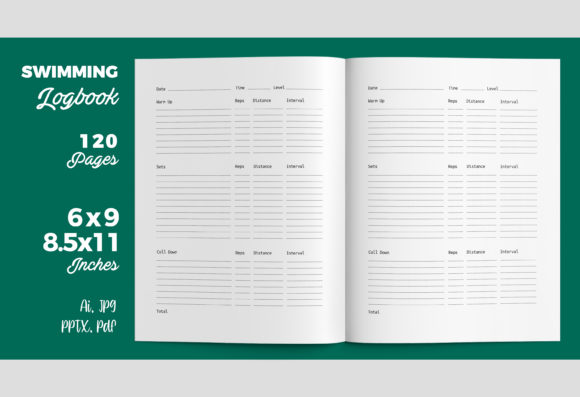
Swimming logbooks come in various sizes, but two common dimensions are 8.5" x 11" inches and 6" x 9" inches. Each size has its advantages:
- 8.5" x 11" Inches: This standard letter size provides ample space for detailed entries, charts, and diagrams. It's ideal for those who prefer a more comprehensive and visually rich logbook.
- 6" x 9" Inches: This smaller, more portable size is perfect for carrying to the pool or gym. It offers a balance between detail and convenience, making it a popular choice for many swimmers.
Page Count
A typical swimming logbook contains 120 pages. This number strikes a balance between providing enough space for detailed entries and maintaining a manageable size. With 120 pages, you can log several months of training, including daily sessions, weekly summaries, and monthly reviews.
No Bleed Design
The no bleed design means that the content does not extend to the edge of the page. This format is easier to print and bind, ensuring that no important information is cut off. It also simplifies the layout, making it cleaner and more professional.
High-Resolution Interiors
To ensure that your swimming logbook looks sharp and professional, use high-resolution interiors. This means that all images, charts, and text should be at least 300 DPI (dots per inch). High-resolution files prevent pixelation and blurry prints, giving your logbook a polished appearance.
Supported File Formats
For a versatile and print-ready logbook, you should prepare your files in multiple formats:
- PDF: The most reliable format for printing, PDFs preserve the layout and formatting of your document, ensuring that it looks exactly as intended.
- AI (Adobe Illustrator): Ideal for vector graphics and detailed illustrations, AI files allow for easy editing and scaling without losing quality.
- JPG: Useful for sharing individual pages or images, JPG files are widely supported and easy to view on various devices.
- PPTX (PowerPoint): If you need to present your logbook in a slideshow format, PPTX files are a convenient option. They are also easy to edit and share.
Designing the Layout
When designing the layout of your logbook, consider the following tips:
- Consistent Headers and Footers: Use consistent headers and footers for page numbers, dates, and other important information.
- Clear Sections: Divide the logbook into clear sections, such as Daily Logs, Weekly Summaries, Monthly Reviews, and Goal Setting.
- Useful Charts and Diagrams: Include charts and diagrams to visually represent your progress, such as line graphs for speed and bar charts for distance.
Content and Features
To make your logbook as useful as possible, include the following features:
- Training Templates: Provide templates for different types of training sessions, such as sprint intervals, endurance swims, and technique drills.
- Goal Setting Pages: Include pages for setting and tracking short-term and long-term goals, with space for notes and reflections.
- Progress Photos and Notes: Add sections for attaching progress photos and writing personal notes, which can be motivating and insightful.
- Health and Nutrition Tracking: Incorporate pages for tracking your diet, hydration, and overall health, as these factors play a crucial role in swimming performance.
Conclusion
A well-designed swimming logbook is a valuable tool for any swimmer, whether you are a beginner or an experienced athlete. By choosing the right dimensions, page count, and file formats, and by carefully planning the layout and content, you can create a logbook that enhances your training and helps you achieve your goals. Start by selecting the appropriate size and format, and then focus on creating a layout that is both functional and visually appealing. With a high-quality swimming logbook, you'll be better equipped to track your progress, set and achieve your goals, and enjoy the journey of becoming a better swimmer.