Incident Report Log Book: A Comprehensive Tool for Documenting and Analyzing Events
In today's fast-paced and highly regulated environments, the Incident Report Log Book has become an indispensable tool for professionals across various industries. This log book serves as a detailed and organized repository for recording, tracking, and analyzing incidents, whether in a corporate setting, educational institution, or any other organization. The relevance of such a tool cannot be overstated, as it helps in maintaining transparency, ensuring compliance, and facilitating continuous improvement.
The Evolution of Incident Reporting
Over the years, the practice of incident reporting has evolved significantly. Initially, reports were often handwritten and stored in physical files, making them difficult to access and analyze. With the advent of digital technology, the process has become more streamlined and efficient. The Incident Report Log Book is a prime example of this evolution, offering a structured and user-friendly format that can be easily shared and reviewed.
Why the Incident Report Log Book Matters
The Incident Report Log Book is not just a document; it's a strategic asset. It provides a clear and consistent way to record and manage incidents, which is crucial for several reasons:
- Compliance and Legal Requirements: Many industries have strict regulations that mandate the documentation of incidents. The log book ensures that all necessary information is captured, helping organizations stay compliant.
- Risk Management: By documenting and analyzing incidents, organizations can identify patterns and trends, enabling them to take proactive measures to mitigate risks.
- Continuous Improvement: Regular review of incident reports can lead to better policies, procedures, and training programs, fostering a culture of safety and quality.
Practical Implications for Users and Professionals
For professionals, the Incident Report Log Book offers a practical solution to a common challenge. Here’s how it can benefit different roles:
- Business Owners and Managers: They can use the log book to maintain a comprehensive record of incidents, which is essential for audits, insurance claims, and legal purposes. It also helps in making data-driven decisions to improve operations.
- HR and Safety Officers: These professionals can leverage the log book to track workplace incidents, ensuring that all employees are aware of potential hazards and that appropriate actions are taken to prevent future occurrences.
- Educators and Administrators: In educational settings, the log book can be used to document and address incidents, promoting a safe and supportive learning environment.
Real-World Examples and Recommendations
Consider a scenario where a manufacturing company experiences a series of minor accidents. By using the Incident Report Log Book, the company can document each incident, including details such as the time, location, and circumstances. Over time, they may notice that these incidents are occurring more frequently in a specific area. This insight can prompt the company to conduct a thorough risk assessment and implement additional safety measures, such as improved lighting or better signage.
Another example is a school where a student falls and gets injured. The Incident Report Log Book can be used to record the incident, including the student's name, the nature of the injury, and the immediate response. This information can then be used to review and enhance the school's safety protocols, ensuring that similar incidents are less likely to happen in the future.
What’s Included in the Incident Report Log Book
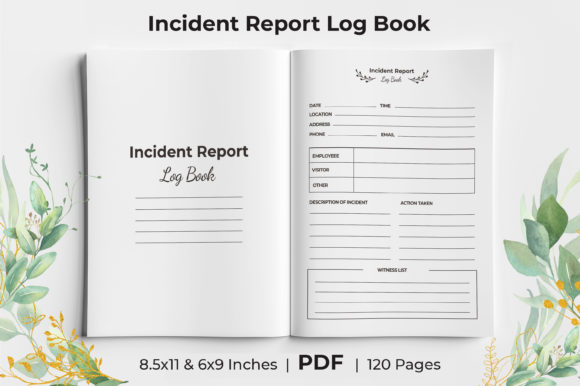
The Incident Report Log Book comes with a range of features designed to make it a versatile and user-friendly tool. Here’s what you get:
- Ready to Upload PDF File: The log book is provided in a ready-to-upload PDF format, making it easy to print or share digitally.
- Dimensions: 6 x 9 8.5 inches: The standard size ensures that the log book is portable and convenient to use in various settings.
- 120 Total Pages: With 120 pages, the log book offers ample space to document multiple incidents, providing a comprehensive record over an extended period.
- Intro Page: An introductory page sets the stage, explaining the purpose and importance of the log book, and providing guidelines on how to use it effectively.
- KDP Tested: The interior of the log book has been tested on Amazon KDP (Kindle Direct Publishing) to ensure high-quality printing and formatting. The bleed-ready interior guarantees that the final product meets professional standards.
Adapting to Modern Workflows and User Expectations
In the digital age, users expect tools that are both functional and user-friendly. The Incident Report Log Book meets these expectations by providing a well-structured and accessible format. Whether you need to quickly jot down an incident or conduct a detailed analysis, the log book is designed to support your needs. Additionally, the availability of a digital version allows for easy sharing and collaboration, making it a valuable resource for teams working in different locations.
Conclusion
The Incident Report Log Book is a powerful tool that can help organizations and individuals document, analyze, and manage incidents effectively. Its practical design and comprehensive features make it an essential resource for anyone looking to improve safety, compliance, and overall performance. By leveraging this tool, you can stay ahead of potential risks and contribute to a safer and more efficient environment.